
Iconic Cities and Villages of the Algarve
Cities That Shaped a Region
The Algarve’s urban identity is as layered as its coastline. These are the cities that have defined the region across the ages.
Faro
The regional capital. Its historic heart — the Cidade Velha — is entered through the Arco da Vila and shelters the cathedral and the remarkable Chapel of Bones, a sobering reminder of the city’s long history.
Tavira
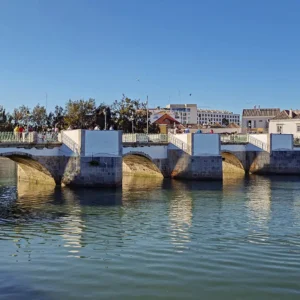
Widely considered the most romantic city in the Algarve, Tavira straddles the River Gilão, connected by its famous ancient bridge. Its whitewashed streets, tiled churches, and calm pace set it apart.
Silves
One of the oldest cities in the region, Silves retains its medieval layout and is home to the best-preserved castle in the Algarve — built in striking red sandstone. It was the first capital of the Algarve under Moorish rule.
Lagos
A city of two faces: cobbled streets steeped in history from the Age of Discovery on one side, and dramatic natural scenery — including the iconic Ponta da Piedade — on the other.
Albufeira
The Algarve’s most visited destination, known for its lively atmosphere, long sandy beaches, and a nightlife scene that keeps the summer calendar full.
Portimão
An important port city with a proud fishing heritage, most famous today for the proximity of Praia da Rocha and the flavours of its legendary sardine grills.
Villages Worth Slowing Down For
Beyond the cities, the Algarve hides a collection of villages where the pace of life and the weight of tradition offer a different kind of encounter.
Alte (Loulé)
One of the most traditional and well-preserved villages in the region. Its whitewashed houses, natural springs, and unhurried atmosphere make it a favourite for those seeking an authentic Algarve.
Ferragudo
A classic fishing village that has held onto its authenticity — narrow lanes winding down to the riverbank opposite Portimão, with views across the estuary.
Cacela Velha (Vila Real de Santo António)
Perched on a clifftop above the Ria Formosa, this tiny hamlet is considered one of the most beautiful and peaceful spots in the Algarve.
Olhão
The fishing capital of the Ria Formosa natural reserve. Its cubist-style architecture, lively fish market, and living maritime traditions make it unlike any other town in the region.
Sagres (Vila do Bispo)
At the southwestern tip of Europe, Sagres carries a quiet, wind-swept mysticism. Its fortress and the nearby Cabo de São Vicente — the “edge of the world” for medieval navigators — are charged with history.
Monchique
In the hills above the coast, Monchique offers a completely different face of the Algarve — dense forests, thermal springs, and a slower, cooler pace that contrasts with the bustle of the shore.
Estoi (Faro)
Known for the Rococo Palácio de Estoi and the Roman ruins of Milreu, Estoi is a quiet reminder that the Algarve’s history stretches back well before the first tourist arrived.
History Worth a Detour
Vila Real de Santo António
Unique for its Pombaline grid layout — perfectly perpendicular streets designed and built after the 1755 earthquake. A fascinating piece of 18th-century urban planning.
Aljezur
Dominated by its 10th-century castle, Aljezur is the gateway to the wild and protected Costa Vicentina, where the Algarve meets the Atlantic in its most elemental form.